
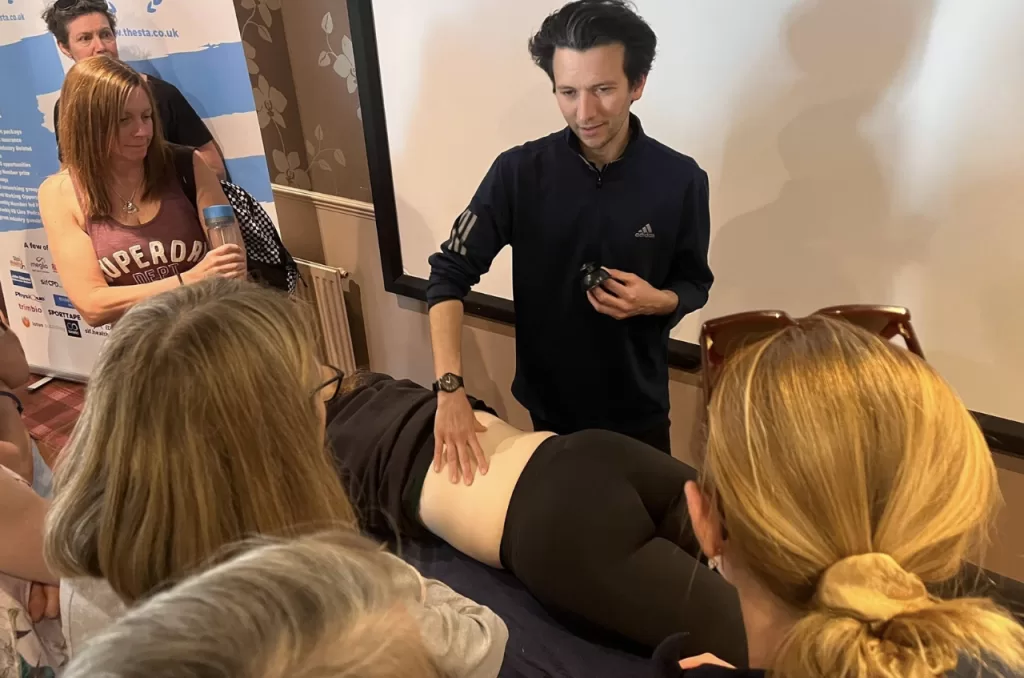
Level 3 Sports Massage Course
A Level 3 Sports Massage qualification combining face-to-face practical training and assessment with online learning.
What Is Involved in Our Level 3 Sports Massage Course
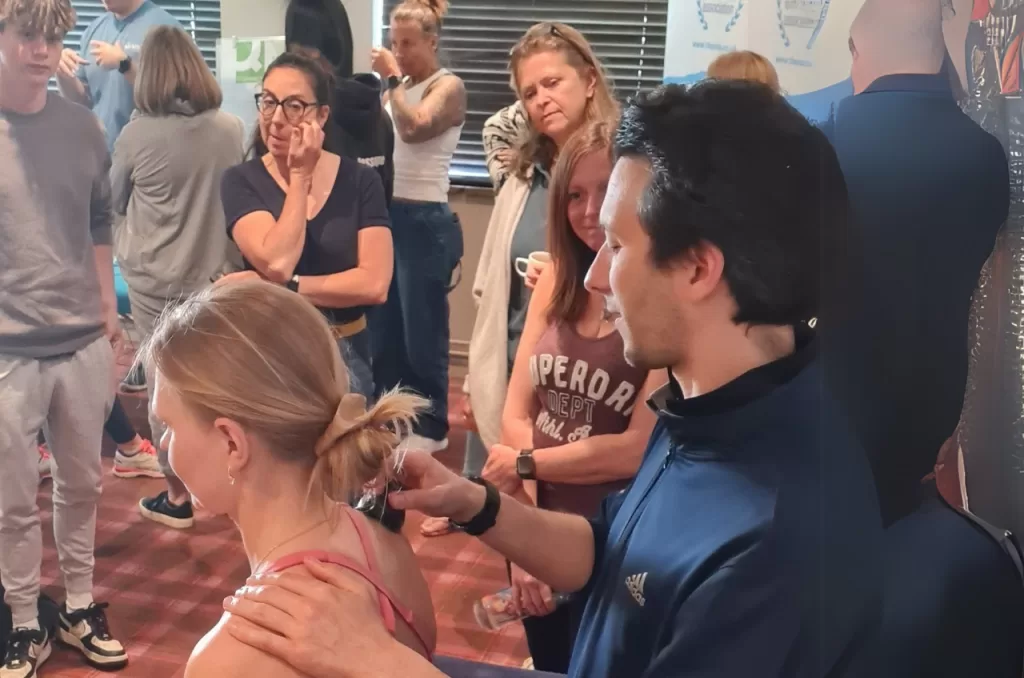
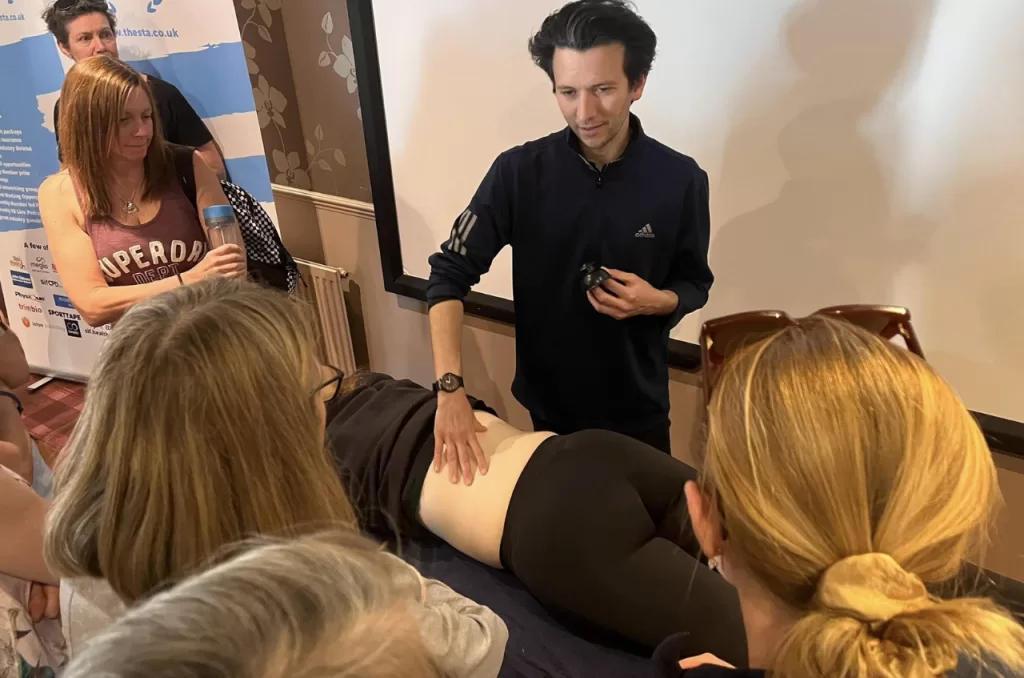
Our Level 3 Sports Massage course combines practical Sports Massage training with anatomy, assessment and the information needed to plan and carry out a Sports Massage treatment.
The course includes face-to-face practical training and examination days alongside online learning that can be completed at your own pace.
The course is developed by Sports Massage Education. Tuition is offered on a 1-to-1 or 2-to-1 basis.
What Makes Our Level 3 Sports Massage Course Different?
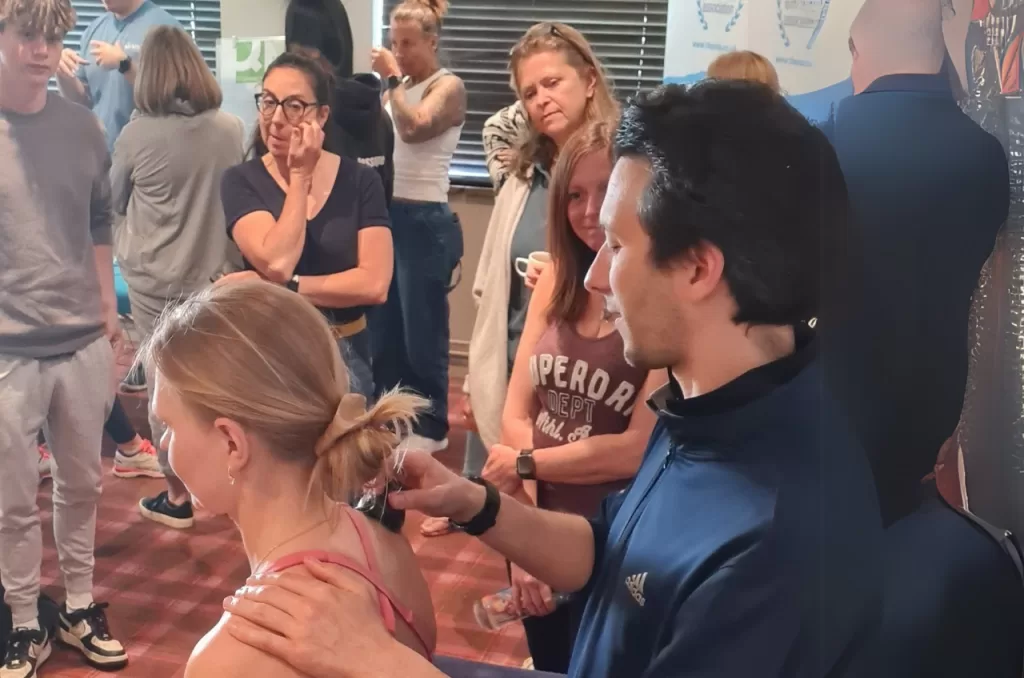
Alongside the core Level 3 Sports Massage syllabus, we include additional techniques and subjects that are important when working with clients in practice.
- Additional treatment techniques — Soft Tissue Release (STR), Muscle Energy Techniques (METs), Trigger Point Therapy and an introduction to Dermoneuromodulation (DNM).
- Pain science — including pain, sensitivity and biopsychosocial factors that can influence symptoms.
- Tissue healing — including the soft tissue repair process and factors that can affect healing.
- Research-informed teaching — the course is informed by current research and evidence relevant to Sports Massage, pain and tissue healing. Course content is reviewed annually and updated where appropriate as the evidence develops.
How the Course Works
1-to-1 tuition is taught on an individual basis. 2-to-1 tuition follows the same format for two people, with dates and pace agreed between both learners.
- 10 in-person days in Broadstone — 60 hours.
- 40 hours of case study work
- Online learning at your own pace — over 12 weeks (4–6 hours per week), 16 weeks (3–4 hours per week), or 20 weeks (2–3 hours per week).
- 2027 start dates — January, May and September.
1-to-1 Tuition
Individual tuition with the course pace and dates agreed with you.
2-to-1 Tuition
Per person, with two students trained together.
Level 3 Sports Massage Course Information
Is this course taught in a group or 1-to-1?
Tuition is offered on a 1-to-1 or 2-to-1 basis rather than in large groups, so the course pace and dates can be agreed with the learner or learners.
How long does the course take?
The course includes 10 in-person days in Broadstone (60 hours), 40 hours of case study work and online learning completed over 12, 16 or 20 weeks.
What does the course cover?
The course covers the practical and theoretical content required for the Level 3 Sports Massage qualification, including anatomy and physiology, professional practice, soft tissue healing, principles of exercise, client assessment, treatment planning and practical Sports Massage.
It also includes additional areas such as Soft Tissue Release (STR), Muscle Energy Techniques (METs), Trigger Point Therapy, an introduction to Dermoneuromodulation (DNM), pain science and tissue healing.
What can I do after completing the qualification?
After qualifying, you can provide Sports Massage to clients within the scope of a Level 3 Sports Massage qualification, including clients with muscle soreness and tension who do not have acute or post-acute injuries or underlying pathological conditions.
You could work self-employed within a clinic, provide Sports Massage through your own business, or continue your training with further qualifications that expand your scope of practice.
Graduates are also eligible to apply for membership of the Sports Therapy Association (STA).
For clients with acute or post-acute injuries, further training such as the Movement Therapy Diploma or an equivalent qualification is required.
How much does the course cost and when does it start?
The course is £1,995 for 1-to-1 tuition or £1,495 per person for 2-to-1 tuition. Current 2027 start months are January, May and September.